Tuesday, March 16, 2010

Public property

I remember when my wife was first pregnant reading the baby book warnings that once pregnant you become public property. That strangers will comment on the big belly, and even touch a pregnant's woman stomach. I thought how odd. What would possess a stranger to have the audacity to do that to a stranger, pregnant or not. I did see a smidgen of that sort of thing during my wife's pregnancies--especially when she was carrying my boy (he was a really big baby...9+ pounds...and my bride's belly reflected that fact). But, all in all, there was no real public property effect from pregnancy.

I've also lived overseas in a country where white people were the minority--and rarely seen in very rural areas that I visited at times. At times, kids would be fascinated by the foreigner--and his hairy forearms. So, that was a bit of an experience in being public property.

But, neither of those experiences approach the public-property aspect that comes with being my boy, or with my boy. Simply put, it's impossible to go anywhere without receiving at least some stares and comments. Usually they're good-natured. The stares are most-commonly from curious people who are (1) amazed that a 3-1/2 year old can control a powerchair so deftly; (2) taken by how damn cute my boy is; or (3) impressed at how cool my boy's "red-racer" is (thanks to permobil for making a great-looking pediatric powerchair). These good-natured looks don't bother me. They are momentary and they come from a not-bad place.

But, then there are the two types of stares that make me want to rip people's faces off. First, the open-mouthed gape. These are the folks who glare and don't look away after a second or two. In fact, don't look away even after a mother-bear or papa-bear glare back. These are the people who turn their heads...sometimes their bodies...to keep staring. Really pretty unbelievable. Rare, but enraging.

Second, the "oh, how sad" puppy dog stare. It's when you just know the brain behind those eyes is thinking "poor little boy" or "poor family." It makes me want to say "save your goddamned pity for someone who needs it--we sure don't." What the puppy-dog starer doesn't know is that my boy is not sad, or unfortunate, or an object worthy of pity. He's a happy, funny, and deeply-loved kid. And, our family neither needs nor wants anyone's pity. We're happy as hell. As my wife said to me the other day -- we dance. We fucking dance! In every possible way. It's what we do. And, if you can't dance, well, you know the rest... (thanks for that one, Emma G).

So, those are the looks. But, public property manifests itself verbally and not just visually. The comments, too, fall into several categories, but that is a topic for a future post.

Friday, March 12, 2010

of Temple Grandin and Jenny McCarthy

HBO has produced a wonderful biopic on Temple Grandin. Dr. Grandin is a professor of Animal Sciences at Colorado State University and has pretty single-handedly reformed the entire livestock-handling industry. About half of all cattle in the U.S. go through a Grandin-designed system from feedlot-to-slaughter. Her designs have been embraced by the cattle industry and also lauded by animal welfare, and even animal rights, advocates. Cattle who pass through her systems endure much less stress, pain, and suffering.

Dr. Grandin also has autism. She credits her autism as enabling her to think visually and put herself in the place of cattle to understand what causes them stress and suffering. She has written and lectured widely on autism as well as animal science, animal welfare, and humane slaughter. In short, she's pretty amazing.

While I haven't read any of her autobiographical books, if the HBO movie is accurate, her mother was told her daughter would never talk and should be institutionalized as a young child. Her mother refused to follow that "standard of care" and instead encouraged and pushed her daughter to attend school, college even. Her mother, as with so many mothers of children with "disabilities" was her advocate. In the movie, one of her mother's mantra's is that Temple and life with autism is "different, not less."

I was struck with the horrible thought of how many children just like Dr. Grandin were institutionalized, neglected, and essentially forced to live up to the no-expectations curse that was put on them. What a crime against humanity for the children, their parents, and society at large.

Dr. Grandin has taught an entire industry that no doubt is often hostile to change, to women, and to animal welfare advocates how to do things better. Not just "different, not less," but "different AND better." What has society lost in snuffing out the potential of all the other Grandins over many generations who were condemned to institutions and the tyranny of low expectations?

Jenny McCarthy has also been in the news a lot lately. McCarthy, of course, came to fame as a Playboy model and then a comedienne and television personality. But, she's best known now as a speaker and activist on autism issues.

Full disclosure -- I don't have any direct experience with autism. But there is something about Ms. McCarthy's approach that I find deeply disturbing as a parent of a child with a disability. McCarthy is focused on a couple things that stand out. First, the supposed vaccine-autism link and second, the idea that kids with autism can be "cured" or, more crudely in her words, "fixed."

I'll leave the vaccine thing aside, except to say that I don't buy it. Not just because of the many studies debunking the one published study claiming a link, but also because I just don't see a motive in this alleged public health cover-up. What is the upside for the "vaccine deniers"? Money? Fame? Desire to create more autistic kids?

Okay, on to my larger concern, the idea that kids living with autism need to be "fixed." Again, I don't know if "a cure" is possible or not, but I have grave concerns about the message that they NEED to be fixed. And, the implication to parents that if they try all the things suggested by the "fixers" and it doesn't work, they have failed. Certainly, there are interventions, therapies, etc. that are no doubt god-sends, valuable, wonderful. For example, Grandin invented a type of squeeze-chute for herself to calm her during times of sensory overload and it is apparently helpful for others living with autism. But an intervention or therapy is not a "fix." An intervention or therapy helps people living with autism, or other challenges, to achieve their potential.

Perpetuating the idea that people with differences need to be "fixed", in contrast, does a lot to prevent those people from living up to their potential. It stunts growth, frustrates development, and fosters the attitudes that make for an unwelcoming and hostile society at large.

By advocating "fixing" kids with autism (or any other disability), it also sends the message that these people are not just different, but that they're "less." And, I find that abominably prejudiced. Stone age thinking. Whatever the equivalent is to racist when talking about anti-disability biases and attitudes.

Come to think of it, why don't we have a word for that? We have "racist", "sexist", "homophobic", "classist", etc. Okay, that's a topic for a future post.

Would anyone in this day and age suggest that we can "fix" being of color? I know there are still the "you can cure homosexuality" bigots out there, but I do think they are largely seen as the bigots they are.

Thursday, February 11, 2010

Essential reading

I've been thinking a lot lately about Harriet McBryde Johnson, a lawyer, author, and disability rights activist who died in 2008. I've been reading her excellent autobiography Too Late to Die Young, and seeking out her other writings to help guide me in striving to raise my boy to be a proud trouble-maker following in her tiretracks.

I imagine I'll post more thoughts on her writings and perspectives later, but for now, just two things:

First, I suggest reading her "Unspeakable Conversations" essay from the New York Times magazine in 2003. Here's the official link (subscription required) http://www.nytimes.com/2003/02/16/magazine/16DISABLED.html.

This essay comes out of well-known debates she had with philosopher Peter Singer. I read a good deal of Peter Singer's writings long before ever having a connection to disability issues, and it's wonderful to read Johnson's treatment of some of his most controversial philosophical positions. An interesting note is that Peter Singer came to respect and like Harriet Johnson a great deal and wrote an obituary for her after she died.

Second, I just have to share one of the most wonderful lines from Johnson's autobiography:

"When I die, I might as well die alive."

Monday, February 8, 2010

Rockin' out

I sit here as my daughter hits the auto-song function on her electronic keyboard (piano practice is over) and is dancing furiously to the jazzy tune that is blasting from that cool device. My boy is loves it -- "come on you guys, get up and dance" he yells to us. "Mommy, dance!" ... "Daddy go ahead and dance!" he insists as he cuts quite the rug himself, sitting in his chair in the dining room.

He insists on dancing from his seat in the dining room for two rounds of "rockin out", but I finally convince him to join us in the living room for the third and fourth rock-outs.

The Axis Dance company (http://www.axisdance.org) ain't got nothin' on us.

Tuesday, January 26, 2010

Of bathrooms and parking lots

We're far from a barrier-free world...a long way from achieving the Dream of which I wrote in my last post. But, thank God for the Americans with Disabilities Act. I cannot imagine navigating through the world with my boy in a pre-ADA world. What in the world did people who use wheelchairs do before sidewalk cut-outs and accessible entrances to businesses, airports, libraries, and museums? I think often of the disabled ADA activists who literally crawled up the U.S. Capitol steps on the run-up to the passage of that great civil rights law to demonstrate why it was so sorely needed.

Thank you, thank you, thank you to you all. Thank you to Republican Dick Thornburg and Democrat Ted Kennedy who were both instrumental in that landmark law.

Accessibility issues never really entered my consciousness until having a
child. And then, it was only to note how great sidewalk cut-outs are when
pushing a stroller. Now, of course, I think about accessibility every single day. Obviously, when I¹m with my boy, I have to search out the elevator at the mall, choose a route to the grocery store with cut-outs, and find a van-accessible parking space. But, it's also with me when I'm without him. I find myself noting whether or not my boy could get into whatever shop or restaurant or office I'm visiting; being really happy when a simple ramp makes a whole establishment accessible (and not just the foyer); and realizing that I'm not going to buy anything at that little boutique after all because my boy couldn't get up the step in front and through the door.

There are two particular components of an accessible world that I rely on and need almost every time I'm out with my boy--a disabled bathroom stall and a van-accessible parking space. Both can generally be found most places ... it's actually really great that nearly every public restroom has one larger stall that can accommodate a wheelchair and that blue curbs and disabled parking spaces are commonplace.

But, just because they're commonplace doesn¹t mean they're available to people who really need them.

Let's talk bathrooms. I've always liked the disabled stalls. Long before kids, long before thinking I'd ever have first-hand experience with disability issues, I took advantage of those large stalls. First, they¹re great when you need to change clothes--like at the airport when you desperately want to get out of the business suit and into jeans for a long flight. Second, they feel a bit more private than the other stalls, which is nice. And third, if you have a young kid with you, it's a lot easier to help her/him when there¹s space to turn around.

I always figured that if the large stall is empty, no harm in going ahead and using it. After all, I'll be done soon enough and the chances of a wheelchair-user needing it at the same time is low. I have learned, though, how wrong-thinking that was. Because so damn many able-bodied people think the same way, the large stall ends up being the first one taken -- the on most often used -- and therefore the one least likely to be free when someone really needs it.

At first, I totally understood that people-by and large-mean no disrespect or thoughtlessness in using the big stall. And I know that's true. But when a 3-year-old needs to pee, he needs to pee. And it is back-breaking, as well as completely lacking in privacy for my boy, to have to transfer him from his powerchair outside a little stall onto the toilet in the little stall.

So, I now have a routine. If we go into a bathroom and the big stall is occupied, I'll look underneath to check for a walker, or crutches, or a wheelchair. When none is there, I'll say something like, "Well, dude, looks like someone is using the only stall that will fit your wheelchair, and all these empty ones out here are too small, so we'll have to wait for him to finish" in a loud (albeit friendly) voice. That usually results in a quick flush and a hurried exit from the able-bodied big-stall-occupier.

I also tell this tale to everyone I know so they will remeber to use the little stalls and keep the big one open for those who need it.

Parking is another issue. Unlike stall-users who, I think, just don't think about whether someone might need the space, I consider disabled-parking abusers by and large selfish, callous, and rude. Well, I guess there are different types.

First type: the "I'm just waiting for my friend and will pull out of it anytime someone needs it." Okay, I know that may not seem completely unreasonable and you don't mean to be rude, but if you think for a second, you'll realize that: (1) if it appears that all the spots are taken, someone who really needs one likely will just keep driving around looking in vain for a spot; (2) people with physical disabilities aren't really able to stop, get out of their car and ask you to please move; and (3) disabled only means disabled only, damnit!

Second type: the "I have a disabled placard even though I don't really need it." Okay, maybe you can't really tell from seeing someone spring from their car and run into Macy's whether maybe they really have some hidden disability (such as a legitimate medical issue like pulmonary disease, etc.) and do need that spot. But, come on! I can't count high enough to keep track of all the perfectly-able-bodied-appearing people who have taken spots I need to unload my son from the van. I know, I just know in my heart that a huge number of people with disabled placards don't really need them and are just abusing the system. And, I'm sorry, but elderly does not necessarily equal disabled. My parents are pushing 80 and they park in steerage just like everyone else because they can actually walk through a parking lot and don't need space to unload equipment. Able-bodied people of any age need to leave the spots for those who really need them.

Third type: the "sack of ----." This is rare, but happens. People with no disability and no placard take up a disabled parking space because they are too lazy or too selfish or whatever to deal with parking like everyone else. They need to have their cars towed and sold at auction to fund disabled services for the city. Once, we even had a car park in the cross-hatch of a disabled spot--making it impossible to open the side door of our van and deploy the ramp. I've never wanted to slash a set of tires more in my life (of course, I didn't). But such selfishness really is enraging.

Also in this category are people who fraudulently get a disabled placard. See this enraging recent San Francisco Chronicle story about abuse of disabled placards: http://www.sfgate.com/cgi-bin/article.cgi?f=/c/a/2007/03/26/MNGOLORI7C1.DTL&hw=placards&sn=001&sc=1000. It focuses on the loss to the city of parking fees. I think I remember a Dateline piece some time back where they approached people who had placards, but looked very suspiciously able-bodied.

Speaking of cross-hatches -- people put all kinds of stuff in them. Shopping carts are the most common thing, but also stores leave empty pallettes, and once a moped parked in one next to my van...again making entry and exit impossible for my boy.

Okay, what's the point of this rant? I don't know, but it feels good to rant sometimes. Seriously, I am convinced that most of these offenses are simply out of ignorance and that we need a public education campaign letting people know that those stalls, those spots, those sidewalk cut-outs that people stand in all the time, exist for a very specific reason and that the able-bodied need to just keep them open. Even if it seems silly, even if it seems unlikely that anyone within miles actually needs it, just leave it free and clear because when someone does need a van-accessible space, or a large bathroom stall, or a sidewalk cut-out, they really really need it.

Oh, a ticket for illegally parking in a disabled spot should cost at least $1,000 for the first offense, $5,000 for the second, and on the third you should have your license suspended for at least one year.

Unless it's a Lamborshini Countach like the one in the picture above (found on the blog http://infospigot.typepad.com/infospigot_the_chronicles/2007/03/powerful_sports.html). This car parked outside a library in Berkeley, California actually had a placard hanging on the rear-view mirror, but boy one wonders. It's hard enough to climb into a sports car as an able-bodied twenty year old, so it's hard to imagine someone with a true physical disability would drive such a beast. If the placard for this "supercar" was not legitimate, I'd want the car seized and auctioned off and all money given to disability rights groups or other non-profits that serve people with disabilities.

Tuesday, January 19, 2010

The Dream continues

Ben Mattlin has a wonderful piece in last Friday's USA Today about the lessons of Martin Luther King and disability rights (available here: http://benmattlin.blogspot.com/
and at the USA Today website here: http://blogs.usatoday.com/oped/2010/01/column-disabled-owe-personal-debt-to-king-as-well-.html#more).

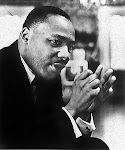
As the family listened to some of Dr. King's speeches yesterday (a yearly tradition), I couldn't help thinking of how his words still resonate not just for racial justice but also to disability rights. And, indeed, to so many politicians and pundits of today who suffer from the same "high blood pressure of words but anemia of deeds" against which Dr. King warned in his "Give us the Ballot" address.

We couldn't listen to "I Have a Dream" as a family, because my girl's class is listening to it today in school and she insisted on waiting to hear it with them. A demand to which I happily acceded.

But thinking of Dreams of the sort imagined on the Lincoln Memorial steps that day in '63, made me realize that my Dream for my boy is not that he no longer need to use a wheelchair, but that it not matter one bit that he does...

...that no store will have an entry step that poses an insurmountable barrier

...that every playground will have ramps to the top of every structure so that all may play and reach the same heights

...that all new homes and buildings will incorporate universal design

...and that my boy not have to endure the stinging stares of curiosity and the caustic comments of ignorance.

My Dream is a barrier-free world and a consciousness of disability that does not victimize or pity, but understands and respects. Seems a long way off, but I'll bet few in 1963 ever dreamed there would be an African-American president elected less than half a century later.

Sunday, December 27, 2009

Unconditional love

Wow. I sit here with a tear rolling down my cheek. I'm not sad, I'm just so touched and happy and amazed at the love one person can feel for another. No, not me loving my boy (well, of course, I do, but this post is not about that). I'm talking about the unconditional love of an adoring sibling.

See, my boy has an older sister. She's six. She's a typically-developing spit-fire. She can be quite a handful, but she's also the most loving, caring, amazing little human. Here's what just happened...but first the background. My kids share a room. Their beds are along opposite walls from each other. When we tuck the kids in, we always pull up the covers and give them kisses. My girl won't get to sleep unless she has at least a sheet on her (just like me...I need at least some covers). My boy can't pull his covers up because of the muscle weakness from spinal muscular atrophy. Thus, we always pull up the covers and tuck them in.

So, it's been a really great day so far. Took the kids to a museum, saw a great mummy exhibit that they thought was really cool, took the boy for a much-needed haircut, and played Sorry and Zingo as a family before bedtime. They were really tired by the time teeth were brushed, pajamas were on, and books were read. And when they're over-tired, they don't want to sleep. And when they don't want to sleep, they don't want covers on. So, the wife and I just told them goodnight and turned off the lights without covering them up. So be it -- my girl can pull her own covers up when she's good and ready, and I can go in after my boy has fallen asleep and cover him up.

Flash forward 15 minutes. I tiptoe into the kids' room and...my boy already has his covers puled up perfectly and is sound asleep with the most peaceful look on his face. My girl is still awake and tells me -- "Daddy, I waited until he was asleep and then pulled up his covers."

My heart melted. I never asked her to do that. Never suggested she do that. Never even mentioned I'd come back to cover him so he wouldn't be cold. She just did it all on her own because she loves her little brother and wanted to take care of him. I cried when I told my wife. How amazing is she? And, she does little things like this for her brother all the time. She loves him beyond anything I've ever seen. He is blessed to have her.

And I'm the luckiest Daddy in the world to have them both in my life.