




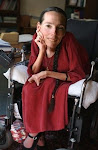





HBO has produced a wonderful biopic on Temple Grandin. Dr. Grandin is a professor of Animal Sciences at Colorado State University and has pretty single-handedly reformed the entire livestock-handling industry. About half of all cattle in the U.S. go through a Grandin-designed system from feedlot-to-slaughter. Her designs have been embraced by the cattle industry and also lauded by animal welfare, and even animal rights, advocates. Cattle who pass through her systems endure much less stress, pain, and suffering.
Dr. Grandin also has autism. She credits her autism as enabling her to think visually and put herself in the place of cattle to understand what causes them stress and suffering. She has written and lectured widely on autism as well as animal science, animal welfare, and humane slaughter. In short, she's pretty amazing.
While I haven't read any of her autobiographical books, if the HBO movie is accurate, her mother was told her daughter would never talk and should be institutionalized as a young child. Her mother refused to follow that "standard of care" and instead encouraged and pushed her daughter to attend school, college even. Her mother, as with so many mothers of children with "disabilities" was her advocate. In the movie, one of her mother's mantra's is that Temple and life with autism is "different, not less."
I was struck with the horrible thought of how many children just like Dr. Grandin were institutionalized, neglected, and essentially forced to live up to the no-expectations curse that was put on them. What a crime against humanity for the children, their parents, and society at large.
Dr. Grandin has taught an entire industry that no doubt is often hostile to change, to women, and to animal welfare advocates how to do things better. Not just "different, not less," but "different AND better." What has society lost in snuffing out the potential of all the other Grandins over many generations who were condemned to institutions and the tyranny of low expectations?
Jenny McCarthy has also been in the news a lot lately. McCarthy, of course, came to fame as a Playboy model and then a comedienne and television personality. But, she's best known now as a speaker and activist on autism issues.
Full disclosure -- I don't have any direct experience with autism. But there is something about Ms. McCarthy's approach that I find deeply disturbing as a parent of a child with a disability. McCarthy is focused on a couple things that stand out. First, the supposed vaccine-autism link and second, the idea that kids with autism can be "cured" or, more crudely in her words, "fixed."
I'll leave the vaccine thing aside, except to say that I don't buy it. Not just because of the many studies debunking the one published study claiming a link, but also because I just don't see a motive in this alleged public health cover-up. What is the upside for the "vaccine deniers"? Money? Fame? Desire to create more autistic kids?
Okay, on to my larger concern, the idea that kids living with autism need to be "fixed." Again, I don't know if "a cure" is possible or not, but I have grave concerns about the message that they NEED to be fixed. And, the implication to parents that if they try all the things suggested by the "fixers" and it doesn't work, they have failed. Certainly, there are interventions, therapies, etc. that are no doubt god-sends, valuable, wonderful. For example, Grandin invented a type of squeeze-chute for herself to calm her during times of sensory overload and it is apparently helpful for others living with autism. But an intervention or therapy is not a "fix." An intervention or therapy helps people living with autism, or other challenges, to achieve their potential.
Perpetuating the idea that people with differences need to be "fixed", in contrast, does a lot to prevent those people from living up to their potential. It stunts growth, frustrates development, and fosters the attitudes that make for an unwelcoming and hostile society at large.
By advocating "fixing" kids with autism (or any other disability), it also sends the message that these people are not just different, but that they're "less." And, I find that abominably prejudiced. Stone age thinking. Whatever the equivalent is to racist when talking about anti-disability biases and attitudes.
Come to think of it, why don't we have a word for that? We have "racist", "sexist", "homophobic", "classist", etc. Okay, that's a topic for a future post.
Would anyone in this day and age suggest that we can "fix" being of color? I know there are still the "you can cure homosexuality" bigots out there, but I do think they are largely seen as the bigots they are.


CONVERSATIONS ABOUT INTER-ABLED ROMANCE, part 5
11 years ago


